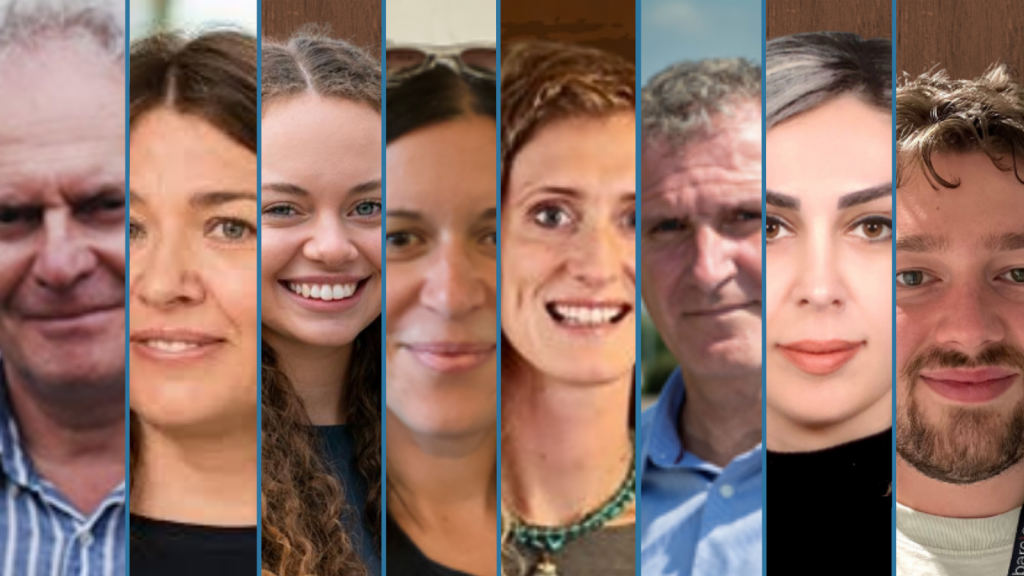
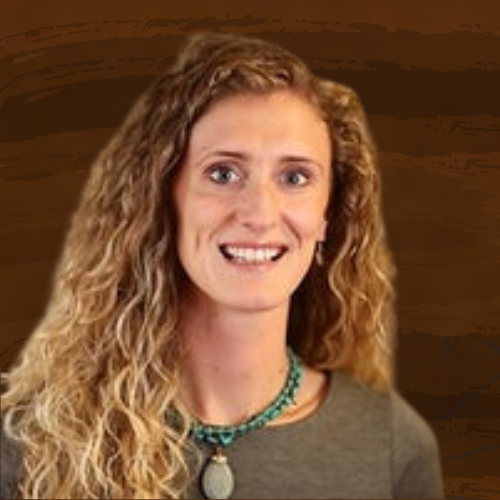
Now in its tenth month, The RISE Study is continuing its research into the provision, uptake and consumption of school meals. Here, we introduce the other half of the team.
‘RISE provides a valuable opportunity to collaborate with some new colleagues and stakeholders on an important public health issue to improve child health.’
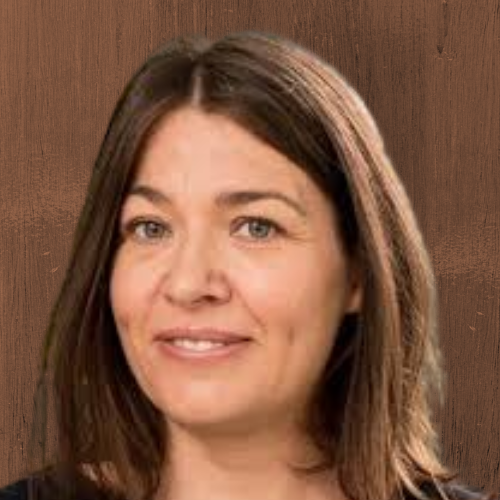
Dr Suzanne Spence, Lecturer in the Human Nutrition and Exercise Research Centre, Newcastle University.
Describe your background and previous experience. I am a Lecturer in Public Health Nutrition at Newcastle University, with expertise in evaluating the impact of policy and school-based interventions on children’s dietary behaviours across both primary and secondary school settings.
What is your role in RISE? Along with Rochelle, I co-lead Work Package 2.
Why do you think RISE is important? The RISE study plays an important role in evaluating the impact of UFSM implementation on the dietary intake of primary school-aged children, whilst also exploring other broader implications, such as the process of implementation and school food systems across the UK.
What are your hopes for RISE?Through the RISE study, I hope to contribute to the generation of much needed evidence on the impact of UFSM policies, helping to support future policy decisions. It also provides a valuable opportunity to collaborate with some new colleagues and stakeholders on an important public health issue to improve child health.
‘There is much to learn from the divergent experiences and approaches across the UK.’
Professor John Holland McKendrick, Professor in Social Justice, Co-Director, Scottish Poverty and Inequality Research Unit, Department of Social Sciences, Glasgow Caledonian University.
Describe your background and previous experience. I am Co-Director of the Scottish Poverty and Inequality Research Unit.. Much of my recent work has considered inequalities in access to food – in schools and beyond – in Scotland.
Why do you think RISE is important? There is much to learn from the divergent experiences and approaches across the UK.
What is your role in RISE?Learning for Scotland (!) and sharing the experiences from Scotland with those from other parts of the UK.
What are your hopes for RISE?Action and progress. Generating knowledge and increasing understanding must be more than an academic indulgence.
‘RISE is an extremely important research project because it will furnish new data on some of the most pressing challenges in the school food system’
ProfKevin Morgan, Co-Investigator
Describe your background and previous experience. My research background has largely revolved around innovation studies and urban and regional development. But over the course of the past 20+ years I have also developed a strong interest in public food provisioning, especially school food policy and practice. I recently summarised the results of this research in a new book, Serving the Public: The good food revolution inschools, hospitals and prisons (Manchester University Press). I am a member of the School Meals Coalition, a UN-inspired campaign which aims to enable every child in the world to have a nutritious meal at school by 2030.
What is your role in RISE? I provide strategic support for the RISE project. Alongside Sara, overall study lead, I am academic co-lead on Work Package 1, one of the aims of which is to map school food systems in the 4 nations of the UK.
Why do you think RISE is important? RISE is an extremely important research project because it will furnish new data on some of the most pressing challenges in the school food system, such as why is uptake of universal free school meals lowest in the areas of highest socio-economic deprivation.
What are your hopes for RISE? My main hopes for the RISE project are threefold: (a) to help the school food community to raise the uptake of wholesome free school meals in poor as well as prosperous areas; (b) to help the school food system from farm to fork to develop a sense of shared destiny so that it can design and deliver a truly sustainable food network; and (c) to help raise the status of RISE researchers, especially early career researchers, so that they are internationally recognised for doing leading-edge research in the field of public food provisioning.
‘I hope the study can help to improve food policy and access to healthier meals in schools, evaluate nutritional quality in school meals, and support healthier choices for children to assist development at such a crucial stage of their life.’
RoryChapman, Communications Officer
Describe your background and previous experience. After graduating from Exeter University in 2021, I started my career providing administrative support for Cardiff and Vale University Health Board’s COVID-19 testing unit. Using the experience I gained in the health service, I joined the Wales Institute of Social and Economic Research and Data (WISERD) as their Engagement Assistant, before shortly taking over as Events Officer. I was recruited by DECIPHer in 2024, as Digital Communications and Events Officer for The School Health Research Network (SHRN). I manage SHRN’s website, social media accounts, and co-lead communications for The Student Health and Well-being Survey, which recently had the highest uptake of secondary schools in its 12-year history.
What is your role in RISE? I am the RISE Communications Officer.
Why do you think RISE is important? RISE is important because every child deserves access to nutritious food. However, as the cost of living has skyrocketed in recent years, children living in the poorest households are more likely to develop as overweight or obese, with the high availability and low cost of unhealthy foods being a contributing factor. Universal School Meals are essential, but we need to understand more about the nutritional value of food being offered in schools. RISE will look into whether more needs to be done to make school meals healthier for those who need them the most.
What are your hopes for RISE? I hope the study can help to improve food policy and access to healthier meals in schools, evaluate nutritional quality in school meals, and support healthier choices for children to assist development at such a crucial stage of their life.
‘I aspire for the study to bridge evidence and practice, helping schools, local authorities and government to make informed decisions.’
Dr Kelly Morgan, Co-lead, Population Health theme; Director, The School Health Research Network, Cardiff University.
Describe your background and previous experience. I have worked in public health for over 15 years, originally training in sports science and maternal and child health, before specialising in school health research and evidence-informed policy.
What is your role in RISE? I am co-lead for the overall RISE study and I also lead Work Package 3 and the public involvement strategy.
Why do you think RISE is important? While providing free school meals for all children is essential, it is equally important to understand how these meals are received and whether children from all backgrounds are benefitting.
What are your hopes for RISE? I aspire for the study to bridge evidence and practice, helping schools, local authorities and government to make informed decisions about how to improve nutrition, reduce stigma and support every child’s right to healthy food.
‘I hope RISE generates clear, practical insights that strengthen national decision-making, support practitioners on the ground, and ultimately contribute to a system where every child has access to appealing, nutritious food in school—laying foundations for healthier futures’
Rachel Bath, Public Health WalesConsultant
Describe your background and previous experience. I’m a Consultant in Public Health specialising in early years nutrition and healthy weight. I’ve lead national programmes in Wales focused on tackling early risk-factors for childhood obesity, strengthening school food policy, and developing system-wide approaches to prevention.
What is your role in RISE? I represent Public Health Wales on RISE, working with partners to shape the research, support engagement with stakeholders, and ensure the findings inform policy and practice in Wales.
Why do you think RISE is important? RISE gives us a unique chance to understand what children are offered and actually eat in schools, and what shapes those choices. This evidence is vital for improving the school food system and supporting healthier outcomes for children.
What are your hopes for RISE? I hope RISE generates clear, practical insights that strengthen national decision-making, support practitioners on the ground, and ultimately contribute to a system where every child has access to appealing, nutritious food in school—laying foundations for healthier futures
‘All children deserve a nutritious meal… This is becoming increasingly difficult for families to access.’
Amy Hamlyn, Research Assistant
Describe your background and previous experience. After completing my undergraduate degree in Psychology at Cardiff University I took a research assistant role in the Children’s Social Care Research and Development Centre (CASCADE). I worked on a project called ‘Police in Schools’ which looked Police engagement in secondary schools, firstly mapping what police-school engagement looked like in England in Wales, before conducting the implementation and process evaluation of a randomised control trial of PSHE lessons taught by the Police.
What is your role in RISE? I am a research assistant on RISE, my role is to support aspects of the research for example data collection, analysis, publications etc.
Why do you think RISE is important? All children deserve a nutritious meal, prices of food are rising and this is becoming increasingly difficult for families to access. RISE will look at barriers and enablers to providing a healthy meal for primary school students by working with a range of stakeholders including local authorities, professional in the food industry, school staff, children and parents. Bringing together all this knowledge and these opinions provides a unique opportunity for us to learn about and document the current school food system and work collaboratively to assist these stakeholders in making improvements.
What are your hopes for RISE? I hope RISE helps us improve our understanding of the provision, consumption and uptake of school meals in primary schools so we can work with schools to optimise free school meal interventions in order to gives children better health, educational and wellbeing outcomes.
On a larger scale, I hope the study informs the future of school food policy and practice in order to positively impact the health of future generations.
‘I want RISE to leave a lasting legacy: better school food systems, stronger partnerships, and a foundation of data and evidence that continues to support healthier futures for all children.
Telma Zahirian Moghaddam, Research Associate
Describe your background and previous experience. I am a public health researcher with a PhD in Health Policy and over ten years of experience in population health, epidemiology, and policy evaluation. Before joining Cardiff University, I worked as a Research Associate at the University of the West of England. I have extensive experience leading and evaluating large-scale population health studies and specialise in longitudinal cohort design and mixed-methods research, including qualitative, quantitative, and document analysis. My work has centred on health inequalities in non-communicable diseases and related risk factors particularly obesity and I am interested in projects aimed at reducing these inequalities through robust, policy-relevant evidence.
What is your role in RISE? In RISE, I work across all the project’s work packages, offering flexible support wherever it is most needed. This involves contributing to study materials, assisting with data collection and analysis, reviewing and organising relevant datasets, helping to interpret findings, and supporting the preparation of papers, reports, and other research outputs, as well as facilitating communication within the team. Although my role spans the entire project, I have a particular focus on WP3, which is dedicated to developing strong data infrastructures to enable long-term evaluation of school food system interventions.
Why do you think RISE is important? RISE is important because it addresses a major gap in evidence around how school food systems can support children’s health and reduce inequalities. Policies like Universal Free School Meals have enormous potential, but their impact depends on complex interactions between schools, families, communities, and wider systems. RISE brings together researchers, practitioners, policymakers, and communities to examine these systems holistically. By building better data infrastructures and working in partnership with schools, RISE has the potential to generate high-quality, long-term evidence that can shape national policy, improve nutritional equity, and support children’s wellbeing far beyond the project itself.
What are your hopes for RISE? My hope is that RISE produces findings that are both scientifically rigorous and genuinely useful in practice. I want the project to generate strong, long-term evidence on the impact of UFSM and related initiatives, while also helping to strengthen data systems so that future evaluation becomes easier, more consistent, and more accessible. I hope it amplifies the voices of schools, communities, and children, and ultimately informs national and local policies that truly improve children’s health and reduce inequalities. More broadly, I want RISE to leave a lasting legacy: better school food systems, stronger partnerships, and a foundation of data and evidence that continues to support healthier futures for all children.
More information on the study, its work packages and collaborators can be found below: