
Nick Morris led a review study gauging the UK public’s opinion on active travel. Here, he explains the findings and how they can
help governments to drive engagement.

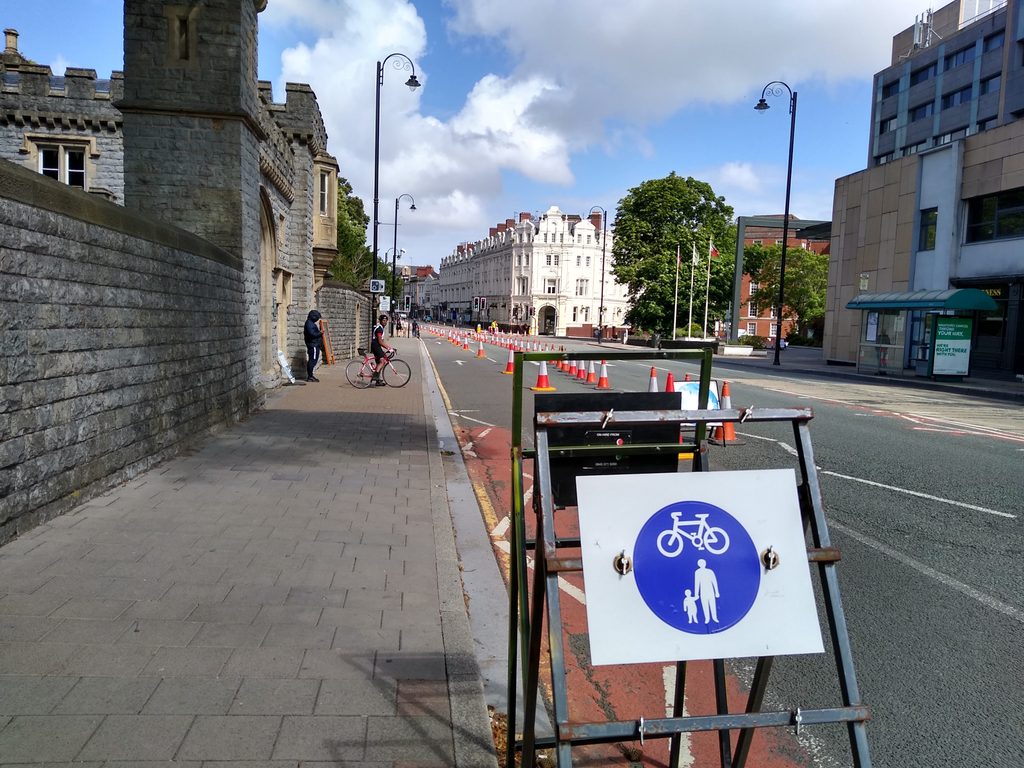
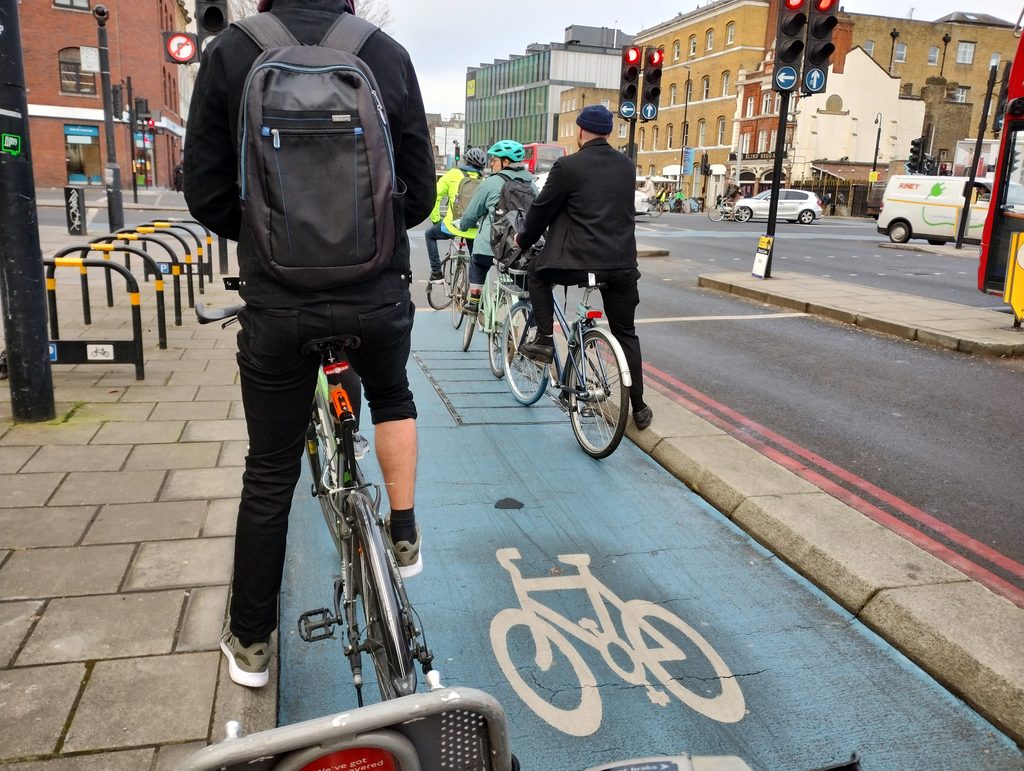
Changes such as a new cycle lane, closing a road outside a school, or reducing speed limits can make walking, cycling or wheeling easier. However, they can also trigger fierce local opposition. Our review of the evidence on public attitudes to active travel changes finds what matters to the people affected by them.
Physical activity challenge
Most people agree that being active is important. However, governments often struggle to help us build more physical activity into our daily lives. Active travel offers one potential solution: walking, cycling or wheeling for more of our everyday journeys, including to work or school, the shops, medical appointments, or to catch buses and trains. However, efforts to promote active travel have faced challenges. Some schemes have won public support while others that are less acceptable have been delayed, watered down or cancelled. When schemes cannot be delivered, we might be missing achievable, relatively low-cost opportunities to help people become more physically active.
New research about public attitudes
I’ve just published a scoping review study that looks at UK public attitudes, whether that’s new physical changes to streets with improved paths and routes for walking and cycling or putting in place encouragements to active travel. The review covers:
- published studies on why people support or oppose active travel changes,
- how this varies across different places and people in different life circumstances, and
- what all this means for governments trying to gain public support for changes.
This is a diverse area that covers public health, transport and town planning, and how councils and transport providers engage people.
This topic has been gaining interest in recent years. Among the 26 studies included in our review, there was more research published during the past five years (14 studies) on this subject than during the previous two decades before that. The majority of the research we looked at focused on physical changes to streets, such as new cycle paths, better crossings for people walking or changes to bring about quieter neighbourhoods. These changes tend to get public and media attention because they are so noticeable and building them can be disruptive. And while we talk about ‘public attitudes’, the public includes a broad range of people who use streets, including people who live or work in an area, run a shop or business, commute to workplaces, or simply pass through on the way to somewhere else. The public also includes schoolchildren, parents and teachers travelling to and from school.
Three big themes
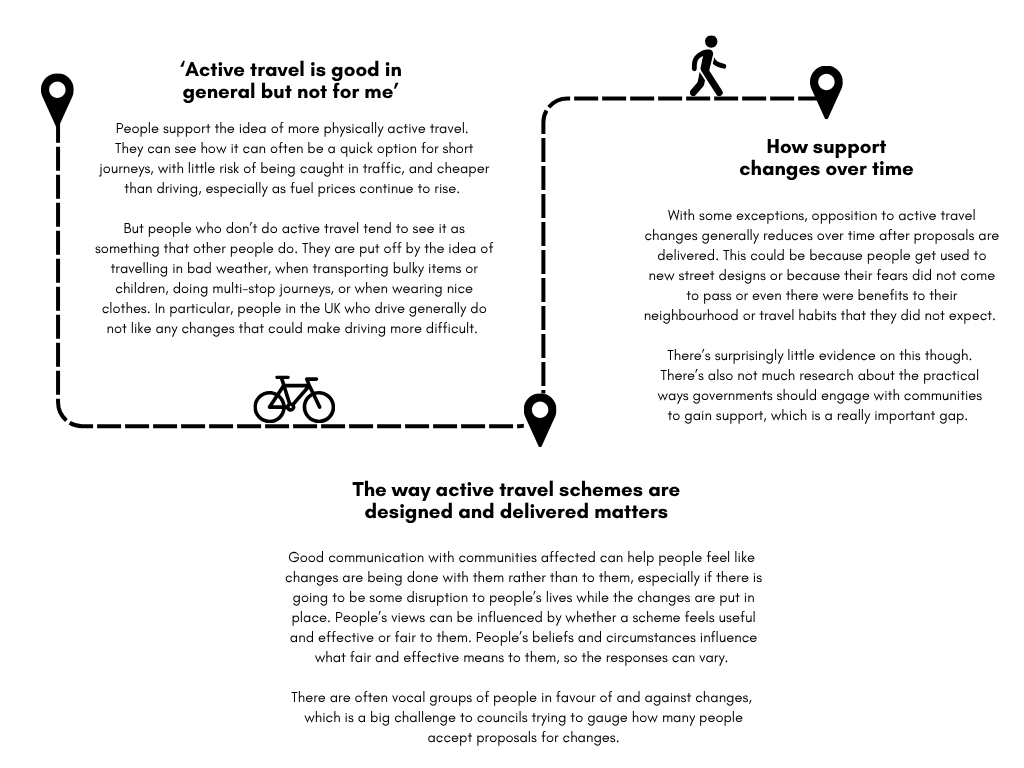
We found three main themes in the research we reviewed:
Why this matters
Wider research shows that trust in governments is falling in high income countries like the UK, which might also affect the public’s willingness to accept changes that governments bring forward. Devolution in the UK is giving more people and places direct policy powers over day to day matters like active travel, public health and transport. This was how Wales gained the powers to reduce the national default speed limit to 20mph to make streets safer and this spurred a lot of lively debate. As well as giving governments more policy options this means more people and places will have opportunities to support or oppose new local and regional policies. New digital tools like AI are also changing how people communicate their objections to councils. So we really need better understanding of what makes active travel measures more or less acceptable to the public and local communities involved, and how governments can work to gain support for changes. If we don’t or can’t do this we risk missing the potential of active travel to help people be more physically active in their daily lives.
Thanks
Thanks to the scoping review co-authors: Kelly Morgan at DECIPHer and Russ Jago, Ruth Salway and Ruth Kipping at the Centre for Public Health in the University of Bristol and Helen Russell at Bristol Medical School.
As lead author of the review I thank my funder, the GW4 BioMed MRC Doctoral Training Partnership, for supporting me to lead this research and make it freely available to all.